
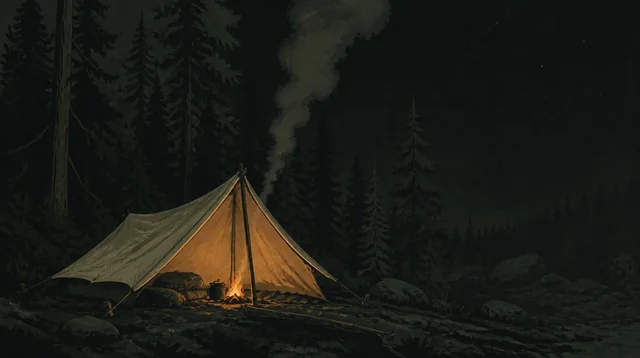
Why So Many Alone Contestants Tap Out in the First Week
Published July 7, 2026 · Updated September 12, 2026
Here is the thing nobody expects when they first watch Alone: the show's most dangerous stretch isn't the starving weeks in month two. It's the first few nights.
Josh Chavez left Season 1 after roughly twelve hours. Desmond White left Season 2 on day zero after finding bear scat near his camp. Season 11 lost Cubby Hoover on day 4, Season 12 lost Jit Patel on day 4, and the completed Season 13 lost two people inside its first four days. Across the franchise, a large share of all exits happen before day seven, and if you look at the tap-out reasons in our season guides, a pattern jumps out immediately.
It's fear, not hunger
Nobody has ever starved out of the show in week one. That is physically impossible for a healthy adult. The week-one exits are almost all one of two things: predator fear or the psychological wall of true isolation.
The predator entries read like a genre of their own. Bear scare. Wolf encounters. Found bear scat, felt vulnerable. These are people with genuine bushcraft resumes, and the difference between camping near wildlife and living alone among wildlife with no backup turns out to be a chasm you can't measure until you're in it.
The second category is quieter and harder to admit on camera. The first night alone, with no crew, no partner, and a satellite phone whose only function is surrender, does something that no amount of skills preparation touches. Contestants have described it as the loudest silence of their lives.
The gear connection
There is a gear angle here too, and it's counterintuitive. The people who exit early rarely exit because of a gear mistake. Their ten items were fine. The approved item list has been refined across thirteen seasons, and by now the meta is well understood: axe, saw, ferro rod, pot, sleeping bag, and food-gathering tools dominate every list, as you can see in the gear database.
What the early exits show is that gear solves the problems people expected to have. Nobody's ten items include a remedy for the 3am certainty that something is circling the shelter.
What the survivors do differently
Watch the eventual winners in their first episodes and you notice they front-load structure. They build, they set routines, they narrate small wins to the camera. Sam Larson, who came back from his Season 1 runner-up finish to win Season 5, spent his first days in Mongolia deliberately slow, doing almost nothing but shelter work and small tasks. The routine isn't just for shelter; it's scaffolding for the mind.
The lesson for viewers picking a favorite in any premiere week: skills matter enormously from week three onward, but in week one, bet on the people who seem boring. Boring is a survival strategy.
If you want to see how each season's first week shook out, every season guide has the full episode-by-episode record with tap-outs, and each contestant's page shows what they carried and why their run ended.
More in the Field Journal or start with the season guides.