
The Art of the Alone Food Cache: Preserving Meat in the Wild
Published August 7, 2025
Spoiler note: this discusses the big-game kills of the season 6, 7, and 8 winners.
Killing a large animal on Alone is not the hard part. Keeping it is. A single big-game carcass can hold hundreds of pounds of meat, and in a cold, wet, predator-rich forest that meat starts working against you the moment it hits the ground. The contestants who turned a kill into a season-long advantage did it through preservation, not luck, and the show has documented the methods clearly enough to study.
The two ways meat goes bad, and the two answers
Wild meat is lost to two things: spoilage and theft. Spoilage is bacteria and warmth. Theft is everything with teeth, from wolverines to bears. Preservation on Alone is really the craft of solving both at once, and the toolkit is old: smoke and dry the meat to stop the rot, then cache it cold and high or heavy to stop the animals.
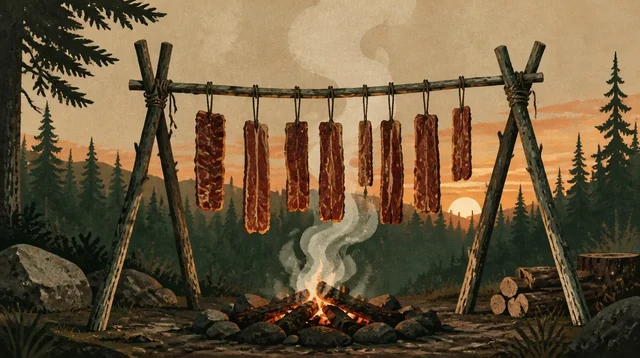
Smoking and drying pull moisture out and lay down a bacteria-resistant surface, which is why nearly every successful hunter on the show ends up building a smoking rack over a low fire. The cache is the second half. A good one is either elevated out of reach or sealed under weight, and ideally cold. Get one half right and skip the other, and you feed the local wildlife instead of yourself.
What the documented runs actually show
Three winners turned this into a science. Jordan Jonas, in season 6, took a bull moose with his bow around three weeks in, reportedly close to 500 pounds of meat. He butchered and smoked it, then had to defend it: a wolverine found the stash and stole part of it, and Jonas killed the animal with a hatchet. That episode is the clearest illustration on the show that a cache is a target, not a safe.
Roland Welker went further in the season 7 Million Dollar Challenge. After a musk ox kill near day 29, he relayed the meat miles back to camp and built what amounted to a stone freezer from boulders and timber, a cache reportedly more solid than most contestants' shelters, specifically to keep bears and wolverines out. Paired with a smoker for curing, it carried him to the fixed 100-day threshold.
Clay Hayes in season 8 showed the stakes from the other direction. By the time he brought down a deer with his bow, he had gone about ten days without fish and was edging into starvation. The meat, roughly 50 pounds, then became a bear-management problem before it was a meal. His run is the case study in how thin the margin is when the cache is your only food.
| Winner | Season | Animal | Preservation approach |
|---|---|---|---|
| Jordan Jonas | US 6 | Moose (~500 lb) | Smoked, cached, defended from a wolverine |
| Roland Welker | US 7 | Musk ox | Smoked plus a stone-and-timber cold cache |
| Clay Hayes | US 8 | Deer (~50 lb) | Field-dressed and protected from bears |
Why fish beat a cache more often than not
For all the drama of a big kill, the show's own record leans the other way. A cache is a high-variance bet: it demands a successful hunt, days of processing, and constant defense. A steady stream of fish demands none of that. That is the core argument in why fishing wins Alone and big game loses, and it is why a gill net quietly out-earns a bow across the seasons. What contestants actually ate, season by season, tells the same story: the reliable calories were usually small and repeated, not large and cached. You can trace that in what Alone contestants actually eat.
The cache is not a bad strategy. It is a demanding one. It rewards the hunters who treat preservation as seriously as the shot, and it punishes anyone who assumes the kill was the finish line. For the rest of what the game does and does not allow before any of this starts, the rules breakdown is the place to look.
More in the Field Journal or start with the season guides.